Only one Steam player in seven is playing a game from the last year
Line up everyone playing Steam’s hundred biggest games by the day their game came out, and the player in the middle is in PUBG: BATTLEGROUNDS, released in December 2017. A quarter are in something from 2013 or earlier. Three quarters are in a game more than 2.6 years old, and only 15% are in one that came out in the last twelve months.
Averaged over September 22 to September 28, 2026 · updated daily
A quarter play this or older
13.2 years
Dota 2, from July 2013

Half play this or older
8.8 years
PUBG: BATTLEGROUNDS, from December 2017
Three quarters play this or older
2.6 years
HELLDIVERS™ 2, from February 2024
Every year Steam is still playing
The same crowd, by the year its game came out. The tallest column is 2012, and almost all of it is one game: Counter-Strike 2, with 17% of everyone on its own. The three hairlines are the quarter marks above — a quarter of players are in games older than the first, half older than the second.
2012
17% of players
Counter-Strike 2
2013
16% of players
led by Dota 2

2017
7.8% of players
led by PUBG: BATTLEGROUNDS

2025
6.4% of players
led by Grand Theft Auto V Enhanced

2026
13% of players
led by WARDOGS
That column needs a footnote. Counter-Strike 2 came out in 2023, but it replaced Counter-Strike: Global Offensive on the same store page, and Steam still dates that page to August 2012. Date it by the relaunch instead — the switch above does — and the player in the middle moves to Total War: WARHAMMER III, 4.6 years old. That is the biggest single adjustment anyone could make to these numbers, because roughly one player in six is in that one game. What it does not touch is the young end. Dated either way, three quarters of Steam is in a game more than 2.6 years old, and one player in seven is in something from the last year.
New games arrive as a thin layer on top
Stack the eras on top of each other, one day at a time since June, and the bottom barely moves. By Steam’s dates, games from before 2014 held between 30% and 39% of players on every one of the 120 days. The layer that moves is the newest. It was as thin as 2.8% on July 3 and as thick as 15% on July 19. The marks along the top are the biggest launches of the summer, on the day each was at its largest.
- Before 2014
- 2014–2016
- 2017–2019
- 2020–2022
- 2023–2025
- 2026
Share of players in the hundred biggest games, by the release year of the game, each day since 1 June. Oldest at the bottom. Edges are drawn as a three-day average; hover or use the arrow keys for each day’s own figures.
The numbers, week by week
| Day | Before 2014 | 2014–2016 | 2017–2019 | 2020–2022 | 2023–2025 | 2026 | Median |
|---|---|---|---|---|---|---|---|
| 1 Jun | 35% | 11% | 14% | 7.8% | 22% | 9.5% | 8.4 yrs |
| 8 Jun | 36% | 11% | 15% | 7.9% | 22% | 7.5% | 8.5 yrs |
| 15 Jun | 37% | 13% | 16% | 8.1% | 22% | 3.7% | 9.4 yrs |
| 22 Jun | 38% | 13% | 17% | 7.9% | 21% | 3.4% | 9.7 yrs |
| 29 Jun | 38% | 14% | 16% | 8.4% | 20% | 3.0% | 10.0 yrs |
| 6 Jul | 37% | 14% | 16% | 9.1% | 21% | 2.9% | 9.7 yrs |
| 13 Jul | 30% | 14% | 16% | 9.1% | 20% | 11% | 8.6 yrs |
| 20 Jul | 34% | 12% | 14% | 9.0% | 18% | 14% | 8.6 yrs |
| 27 Jul | 36% | 12% | 14% | 8.1% | 17% | 12% | 8.9 yrs |
| 3 Aug | 36% | 12% | 13% | 9.5% | 19% | 12% | 8.6 yrs |
| 10 Aug | 36% | 11% | 13% | 10% | 19% | 9.7% | 8.6 yrs |
| 17 Aug | 37% | 11% | 13% | 9.9% | 21% | 8.0% | 9.2 yrs |
| 24 Aug | 37% | 11% | 12% | 9.4% | 19% | 11% | 9.3 yrs |
| 31 Aug | 38% | 11% | 13% | 9.3% | 20% | 9.1% | 9.6 yrs |
| 7 Sep | 36% | 11% | 13% | 9.3% | 23% | 8.0% | 8.7 yrs |
| 14 Sep | 34% | 11% | 12% | 12% | 19% | 12% | 8.7 yrs |
| 21 Sep | 34% | 10% | 12% | 11% | 19% | 13% | 8.8 yrs |
| 28 Sep | 36% | 10% | 12% | 11% | 17% | 13% | 8.8 yrs |
The median moved with it, but not far: between 8.4 and 10.0 years across the whole stretch. By Steam’s dates, on every day since June the player in the middle was in PUBG: BATTLEGROUNDS, released December 2017, or in something older.
What a launch is worth
The three biggest releases since June, each as a share of everyone in the hundred biggest games. For a few days, each was one of the most-played things on Steam. Then the players drifted back to what they were playing before.
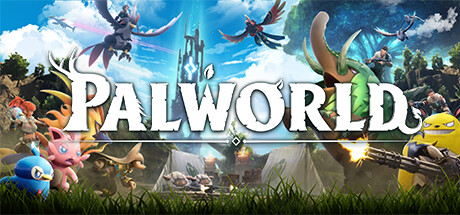
Palworld
Left early access July 9
- At its biggest
- 13%
- July 19
- Four weeks on
- 4.8%
- August 16
WARDOGS
Released September 10
- At its biggest
- 7.2%
- September 10
- Now
- 4.1%
- September 28

How to Fish
Released August 20
- At its biggest
- 3.4%
- August 26
- Four weeks on
- 0.3%
- September 23
The old guard
Five games in Steam’s hundred biggest came out before 2012. The oldest, Garry's Mod, is from 2006, and still averages 21,841 players at a time.

Two things this is not
It is not a verdict on new games. A game that is still in the top hundred after eight years is, by definition, one that lasted; the thousands from the same years that did not are not in the picture. What this measures is where people’s evenings go, and the answer is mostly to games that have already survived years of that sorting.
It is not all of Steam. The hundred biggest games hold about 84% of everyone Coilr counts at the same moments. The long tail under them is younger — it is where most of each year’s small releases live — so counting it would pull the median younger. When we checked in September 2026 the difference was about a year: the same shape, a slightly different number.
Method
Coilr records the number of people in a game from Steam’s own live player counts. For this report each day is read four times, at 00:00, 06:00, 12:00 and 18:00 UTC, so that no one part of the world’s evening decides the answer — Dota 2 and PUBG peak in Asian hours, most other games in European and American ones. A game’s day is the average of those readings, and the hundred biggest games of each day are the ones measured. A hundred is the deepest cut that means the same thing on every day since June.
Every figure counts players, not games: the median is the player in the middle of everyone in those hundred games, sorted by the release date of what they are playing. “Now” is the average of the last seven days. The release date is Steam’s own store date, which for an early-access game is the day it left early access, and for Counter-Strike 2 is CS:GO’s 2012 — the switch above shows what the other choice does.
Left out: desktop toys that sit on the charts without being played (Bongo Cat, TBH: Task Bar Hero, Banana), apps Steam files as software (Wallpaper Engine, Soundpad), and games Steam gives no release date for, such as FiveM and Deadlock — 3.1% of the players measured.
Using this
Free to quote and republish with attribution to Coilr. Recomputed daily, so cite the date above. See also: how few games hold half of Steam.